Blood on Snow
Winter Horror and 'Misery'

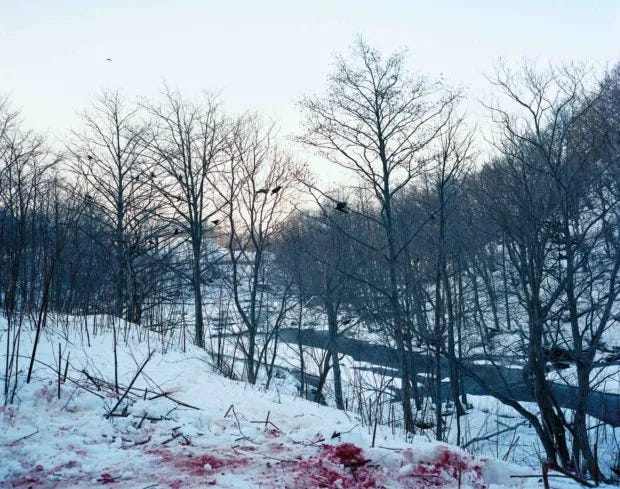
We have passed the solstice and the holidays, heading toward the new year. Now, the light begins its return. Our days are, very, very slowly, growing brighter. But first we must make it through the coldest, most isolating months.
Our winter here in Montana has been strange so far, frigid temperatures followed by warm snaps, so we never quite adjust to the cold. Two years ago, on Christmas, the temperature was subzero, with -50 wind chill. This year, it topped 60 degrees. Now, four days after Christmas, the ground is blanketed with snow again, the lows dipping close to zero.
Winter in the mountains is both beautiful (veils of snow over the peaks, the silhouettes of birds against the white, the pastel fairy-tale colors of sunrises and sunsets) and sometimes deadly. Winter requires preparation, respect for the power of nature. One could make the argument that it is the spookiest season…I live in the windiest town in America and I often joke to my husband that we would have no idea if the house were haunted, we’re so used to the doors creaking open, things slamming against the house or falling over in the driveway, the moans and cracks, cackles and creaks of a house exposed to the elements. A spirit would need to be quite insistent to get our attention.
Winter is the violent howl of the wind, and the gentle susurrations of snow falling, seductive and soothing, urging you out into the white void. A scream and a whisper, and the continual drip, drip dripping of the faucets, left on so the pipes don’t freeze. The voices in your head, suddenly too loud. Ice fairies, what we call the feathers of frost left on the windows in subzero temperatures.
In Rob Reiner’s overlooked masterpiece, Misery (1990), based on Stephen King’s novel, famous writer Paul Sheldon uses the isolation of a lodge in Colorado in winter to leave behind his romance roots and start a new chapter as a serious novelist. But as he’s leaving, the foul weather leads to a car accident, and the horror unspools from there. For writers, isolation is a necessity, a balm, but too much time stuck in our own minds can also expose the cracks in our sanity, as in The Shining (1980), the more famous King adaptation.
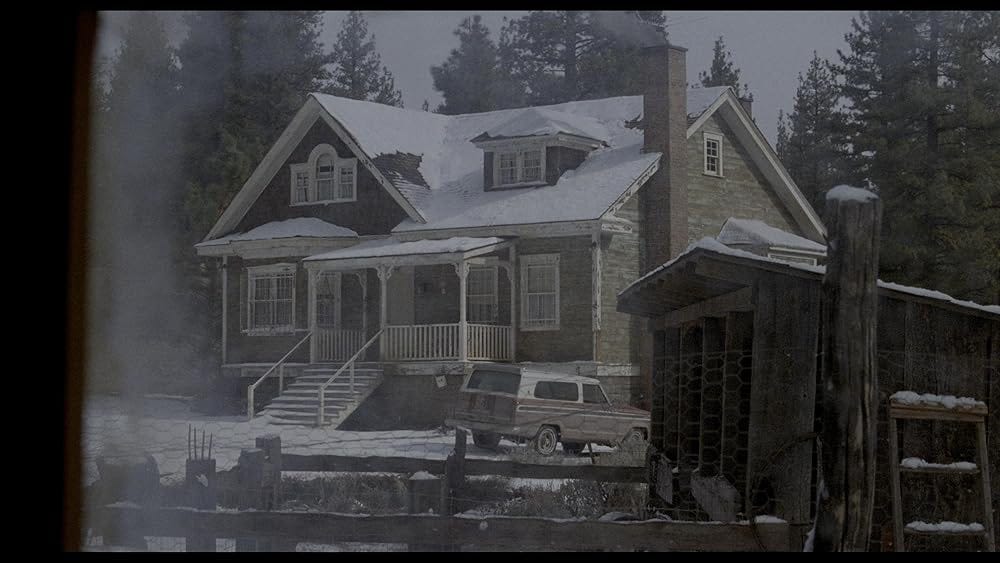
Winter is the catalyst for the horror in both of these films. Winter weather reminds us of our vulnerability. When the temperature dips below zero, a simple mistake or inconvenience such as a car battery or a cell phone dying, taking a wrong turn, or forgetting the proper clothing or survival gear can easily turn deadly. In winter horror, nature’s indifference brings out our primal fears- the fear of the elements, blizzards and whiteouts and avalanches- and reminds us of the fragility of our bodies and minds.
But this also heightens the pleasure. Think of reading a scary winter story while cozied up in your favorite chair with your blankets, hot cocoa, watching the snow falling outside. The visceral experience of danger and catharsis, combined with the pleasure of knowing that you are (temporarily) safe.
While winter has its monsters- yetis and wendigos, the frost giants of Norse Mythology, the yuki-onna of Japanese folklore- the real antagonist in winter horror is often the frightful weather within as well as without.
In Kubrick’s The Shining, perhaps the most famous winter horror film of all time, the Overlook hotel is brimming with spirits, but the most frightening part is not the ghouls but Jack Torrance’s psychological breakdown, and how it makes him turn violently on his own family. (It’s hard to name the most iconic scene in such an iconic film, but Jack plunging his ax through the door while shrieking “Here’s Johnny!” the ultimate patriarch gone homicidal moment, is certainly up there).
(If you’d like to read more about my relationship to The Shining and how it turned me on to horror as a child check this out)
Winter horror is blood in the snow, shapes you can’t quite discern in the white, shifting, coming closer. A stranger arriving on a stormy night. Winter horror is being trapped with someone or something dangerous, no hope of escape….and sometimes that someone is yourself.
In horror movies classics such as The Shining and John Carpenter’s The Thing (1982), as well in more recent vampire tales 30 Days of Night (2007) and the arthouse hit Let the Right One In (2008) supernatural chaos runs rampant in isolated, snow-bound places. Horror auteur Osgood Perkins, in his films The Blackcoat’s Daughter (2015) and breakthrough hit Longlegs (2024), deftly utilizes winter settings to dial up the claustrophobia and pressure-cooker atmosphere of his descents into evil.
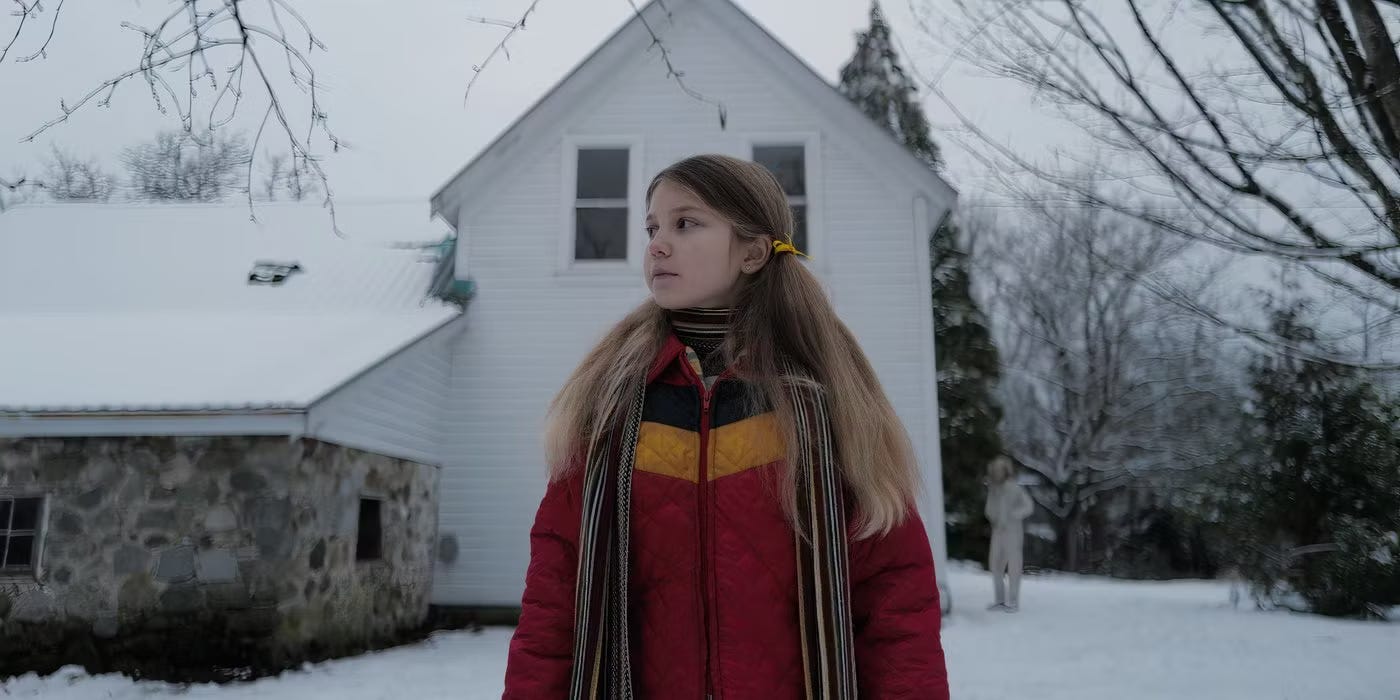
While The Shining explores the madness of winter through supernatural elements, in arthouse horror film The Lodge (2019), the only true antagonist is trauma and the circumstances that trap a psychologically fragile woman, the survivor of a doomsday cult, alone in a house with the future step kids who despise her. The film is bleak and horrifying because of its plausibility. If I was left alone in a house long enough with only people who hated me and my own trauma for company, I just might lose it too.
As Final ghoul Neave Glennon writes in her essay about The Lodge, “winter horror frightens us with the terrifying possibility that the world outside the window has dissolved into a white, depthless nothing.” A blizzard erases; snow blots out the outside world, leaving the protagonist alone with the truest horror of all, their own mind.
The Lodge, Glennon writes, “stands out as one of the most precise articulations of winter’s psychic terror.….The film’s true subject is the collapse of interior boundaries, the domestic, psychological and spiritual, under the weight of an external world that has ceased to exist.”
(For more discourse on The Lodge, check out Offscreenshaman's deep dive )
The Shining might be the most iconic Stephen King movie adaptation, but Misery is the only one to win an Academy Award (Kathy Bates- Best Actress). Misery was on my watchlist before Rob Reiner’s murder but moved to the top of my queue after my husband told me about viewing it as a child, how it still haunts him (particularly THAT SCENE). Since we were already watching a horror film nearly every night, heapings of family trauma and gore, we decided we might as well revisit his childhood nightmares too.
I’ve given myself over to winter creatively, finally (temporarily) setting aside the desert horror I’ve been hacking away at to write about white falling on deep, dark forests, snow witches and rivers of ice. Misery is the perfect chilly and chilling winter horror for when you want something unhinged and slightly old-fashioned (not that that’s a detriment. The house, the wood paneling, Annie’s curious epithets, her ‘doesn’t anybody care to meet a sweet old-fashioned gal’ persona all read pre-1990, but Kathy Bates’s performance is timeless, and the setting conspires to make her all the more terrifying).
The cozy winter scenes outside the windows, which remind me of landscape paintings one might find at a thrift store, add to Misery’s claustrophobic atmosphere.
While not as all-encompassing as the white void The Lodge, the winter weather in Misery causes the car accident that throws Paul Sheldon’s (James Caan) life off course and allows for his isolation in uberfan Annie Wilkes’s secluded cabin after she pulls him from the wreckage.
A repeated horror trope: you’re trapped by some sort of weather event, possibly injured, at the house of someone you’re not sure you can trust, and their repeated claims of going to get help ‘as soon as the phone lines are up or ‘the road is cleared’ soon give way to the obvious…you are stuck with a monster and there’s no help coming.
Once Paul is injured and isolated, the film quickly reveals its main antagonist. Although there are other characters (the agent who is looking for her missing client, the old sheriff and his horny paramour) Misery is very much a two-man show, and it’s the chemistry between Paul, the writer who wants to leave his most famous creation, Misery Chastain, behind, and Annie, the unhinged fan who won’t allow him to kill her off, that makes this film so memorable.
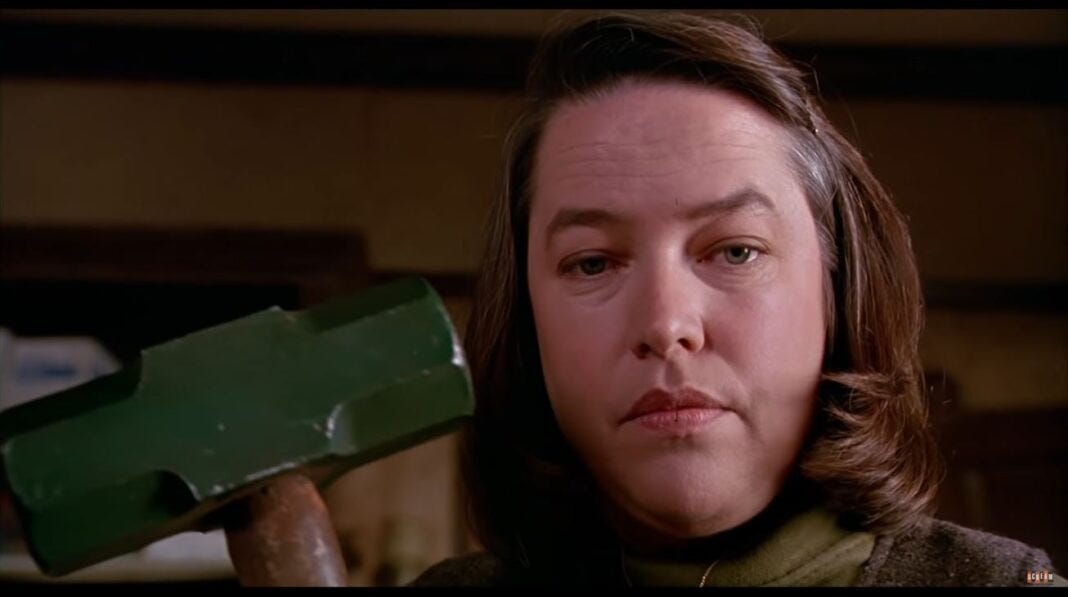
Kathy Bates is beyond iconic as former nurse Annie Wilkes. This role secured her lifelong scream queen status. After Paul allows Annie to read his latest novel, in which he kills off his heroine, she quickly spirals into madness. After burning the manuscript, Annie buys Paul his preferred typewriter and demands that he rewrite his book. Kathy Bates’s brilliant performance demonstrates how quickly the façade of Midwestern politeness can collapse into violence. There is simmering rage behind Annie’s goody two shoes exterior, which culminates in the infamous hobbling scene, still uniquely visceral and horrifying.
(I couldn’t help but recall the most traumatizing scene in my recent watch The Ugly Stepsister when SPOILER ALERT Elvira cuts off her toes in order to fit the famous shoe that Cinderella left behind. The Ugly Stepsister is one of my favorite films of this year and I plan on writing more about it and feminist body horror soon).
Winter horror is an antidote to the forced cheer and sentimentality of the holidays, with its own terrors and its own poetic visual language. Scary stories to tell as you huddle closer to the fire, to pass the long, cold nights. Even when the weather is frightful, and there’s a shape we can’t quite make out in the snow, the scariest thing of all is the desolate landscape inside our own minds.
“A spirit would need to be quite insistent to get our attention.” 🤣🤣
As always great conversation on films, but really bewitched by your writing.